.webp)
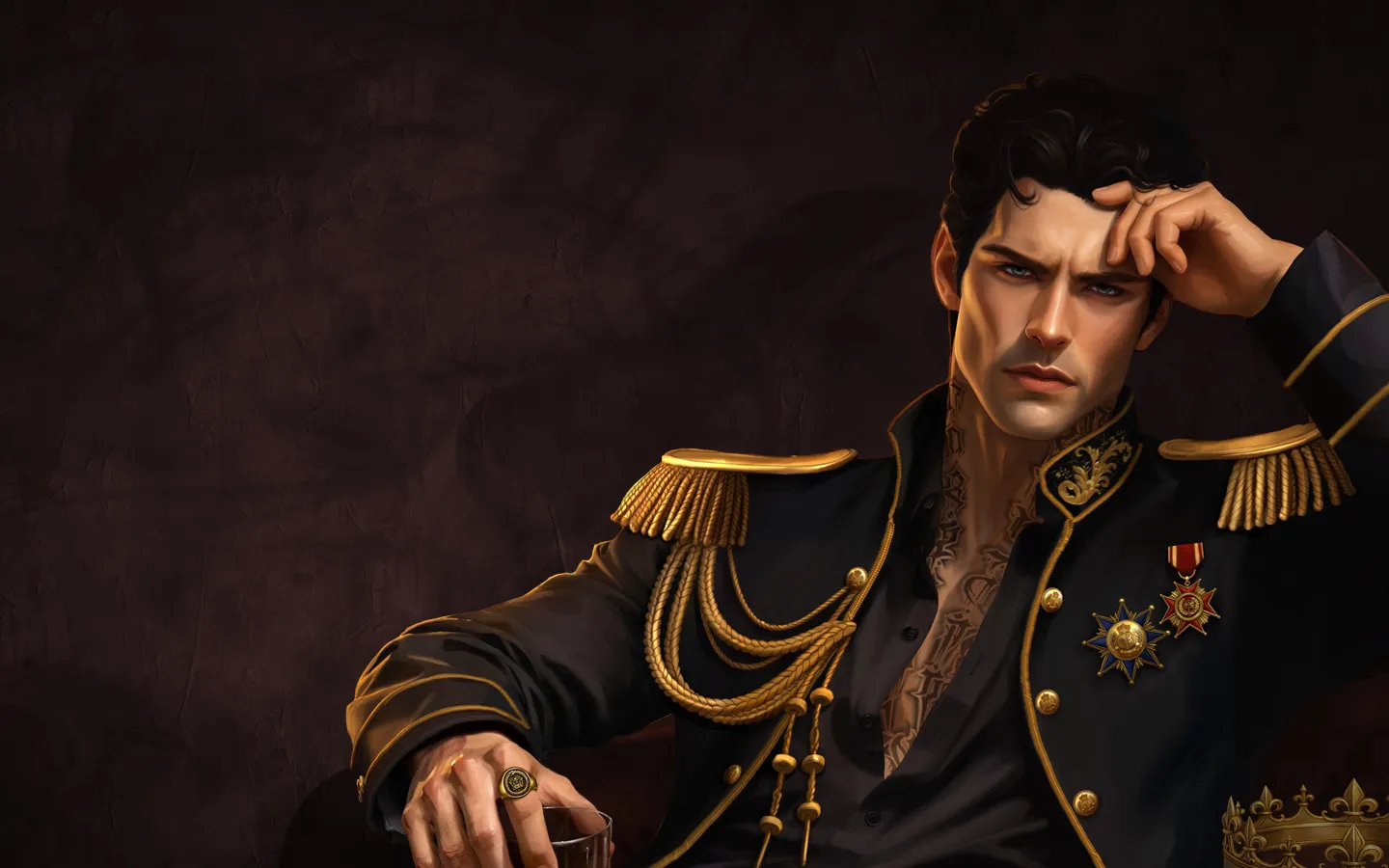
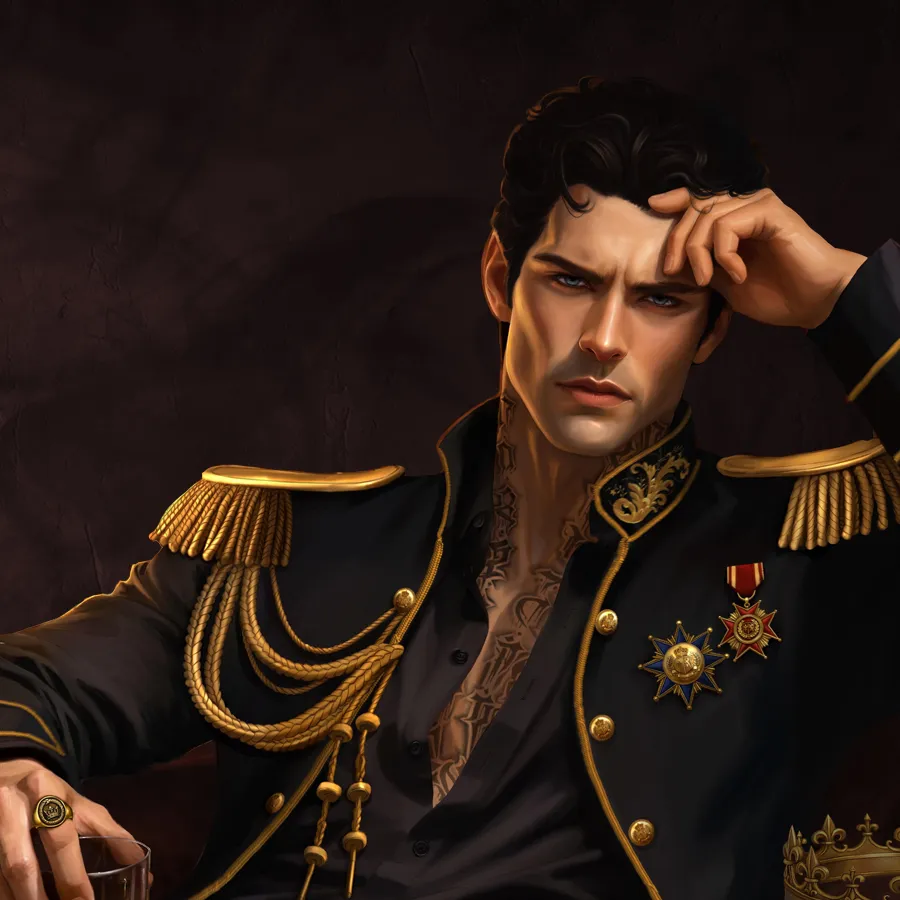
Evander Valcour
High Commander of the Elites - a specialist military legion of mortal males who wield magic manifested from the Veil. Crown Prince of the Empire of Eternal Dawn. The Empire's most feared weapon.

When a man becomes a weapon.
High Commander of the Elites. Crown Prince of the Empire of Eternal Dawn. The Empire’s most feared weapon. There are few names spoken with greater reverence, or greater fear, than Evander Valcour.
Raised to serve an Empire that demands absolute obedience, Evander has spent a lifetime becoming exactly what was required of him. Commander. Soldier. Heir. Weapon. Ruthless in battle and unyielding in duty, he commands the Imperial legions with the kind of precision that crushes rebellions before they have the opportunity to become wars.
To the Empire, he is a hero.
To its enemies, a monster.
Both versions are true.
Yet, neither tells the whole story.
I was never particularly interested in writing a dangerous man who becomes interesting simply because he falls in love. I wanted to know what it costs to become that man in the first place.
What happens to a boy raised to believe his value lies in his usefulness? What happens when strength means endurance, vulnerability is dangerous, and duty is placed so far above desire, that eventually the man beneath it becomes almost impossible to separate from the role he performs?
Evander is an exploration of masculinity, power and the violence of becoming what the world demands of you.
He is frightening because he is competent.
Not because he is reckless.
Quite the opposite, in fact.
Evander thinks. He observes. Calculates. His violence is rarely uncontrolled, and that makes him considerably more dangerous than a man who simply reaches for his sword in anger.
Control is fundamental to him. So is duty. And sitting quietly beneath both, lies an emotional capacity he spent a lifetime learning how to contain.
That conflict is where Evander became fascinating to me.
He can command thousands of men without hesitation, and be entirely wrong-footed by real intimacy. He can make decisions that determine whether others live or die, yet struggle profoundly with choices concerning his own life. He can carry responsibility for everyone around him while barely considering the possibility that he might be entitled to want something for himself.
He feels deeply, though often refuses the language to express it in public. Perhaps, that is where the warrior becomes something closer to a poet. In the late hours of the night, when the silence creeps in…that is where you hear him most clearly.
Because behind the black armour, stands a man haunted by the weight of every life taken in the Empire’s name. A man capable of tenderness precisely because he understands brutality. A man whose sensitivity does not erase his darkness, but makes him painfully aware of its cost.
And I never wanted love to magically cure that. Aria Fenwyck does not arrive and reveal that the monster was secretly a good man all along. That would be far too easy. Instead, she presents him with something infinitely more threatening.
A contradiction he cannot reconcile.
She is a defiant village woman, wielding everything his Empire has taught him to fear. Someone he should be able to categorise as an enemy, and dismiss accordingly. Except she refuses to fit. Once certainty begins to fracture, others have an inconvenient habit of following.
They are not each other’s salvation.
She challenges him.
Infuriates him.
Forces him to confront truths he would rather leave untouched. And, perhaps most dangerously, sees enough of the man beneath the title to make it increasingly difficult for him to pretend he doesn’t exist.
Yet, the choices always remain his.
The story demands it.
Because at the heart of Evander’s story is a question of identity.
Who are you when everything you’ve been taught to be is stripped away?
The Spark of Rebellion begins when he is forced to ask which of the masks he dons actually belong to him. Loyalty has always been his greatest strength, and yet also his greatest weakness.
Some wars are fought with swords.
But the most dangerous ones are fought within.
